
AI Phone Agent vs. AI Chatbot: Which One Does Your Business Actually Need?
Customers reach out however it's most convenient for them — some prefer typing a quick message on a website, others simply pick up the phone. This raises a common question for businesses adopting AI-powered customer service: should you invest in an AI phone agent, an AI chatbot, or both?
The good news is you don't have to choose blindly. Each channel has clear strengths, clear limitations, and specific situations where it shines. Here's how to think through it.
What Is an AI Chatbot?
An AI chatbot is a text-based conversational assistant, typically embedded on a website, app, or messaging platform like WhatsApp or Facebook Messenger. It uses natural language processing to understand written messages and respond instantly, handling tasks like answering FAQs, guiding visitors, or collecting lead information.
What Is an AI Phone Agent?
An AI phone agent handles the same kind of conversational tasks — but over the phone, using voice instead of text. It listens to callers, understands their intent using speech recognition and NLP, and responds with a natural-sounding voice, often completing actions like booking appointments or answering detailed questions in real time.
Key Differences Between AI Phone Agents and AI Chatbots
1. Communication Style
A chatbot works entirely in text — the customer reads and types. An AI phone agent works entirely in voice — the customer speaks and listens. This single difference shapes everything else about how each is used.
2. Urgency and Emotion
Phone calls tend to happen when something feels urgent, complicated, or emotional — a customer with an issue that needs to be resolved right now, or someone who simply prefers explaining a nuanced situation out loud rather than typing it. An AI phone agent is built for exactly these moments, offering real-time, natural conversation.
Chatbots, on the other hand, are ideal for lower-urgency, self-service interactions — a visitor casually browsing a website who has a quick question but isn't ready (or willing) to pick up the phone.
3. Speed of Resolution
For simple, common questions, both channels resolve issues almost instantly. But for complex requests — like rescheduling a multi-step appointment or asking several follow-up questions — many customers find it faster and more natural to simply talk it through with an AI phone agent than type out each detail.
4. Accessibility
Not every customer wants to type — some prefer or need to talk, whether due to personal preference, convenience while driving, or simply because they're used to picking up the phone for anything important. An AI phone agent captures this entire segment of customers that a chatbot alone would miss.
5. Where They Live
A chatbot typically lives on your website or app, only reaching people who are already browsing online. An AI phone agent lives on your business phone number, capturing calls from anyone — including customers who found your business through a Google search, a local listing, or a referral, and simply called instead of visiting your site.
When to Use an AI Chatbot
An AI chatbot is a strong fit when:
- Visitors are already on your website and have quick questions
- You want to capture leads passively, without requiring a phone call
- Customers prefer self-service, especially for simple, repetitive questions
- You need 24/7 coverage for written inquiries across time zones
When to Use an AI Phone Agent
An AI phone agent is the better fit when:
- Your business relies heavily on phone calls for bookings or inquiries
- Customers are used to calling rather than messaging (common in home services, healthcare, and local businesses)
- Calls often involve more complex, multi-step requests
- You want to eliminate missed calls, long hold times, or after-hours coverage gaps
Why the Best Strategy Often Combines Both
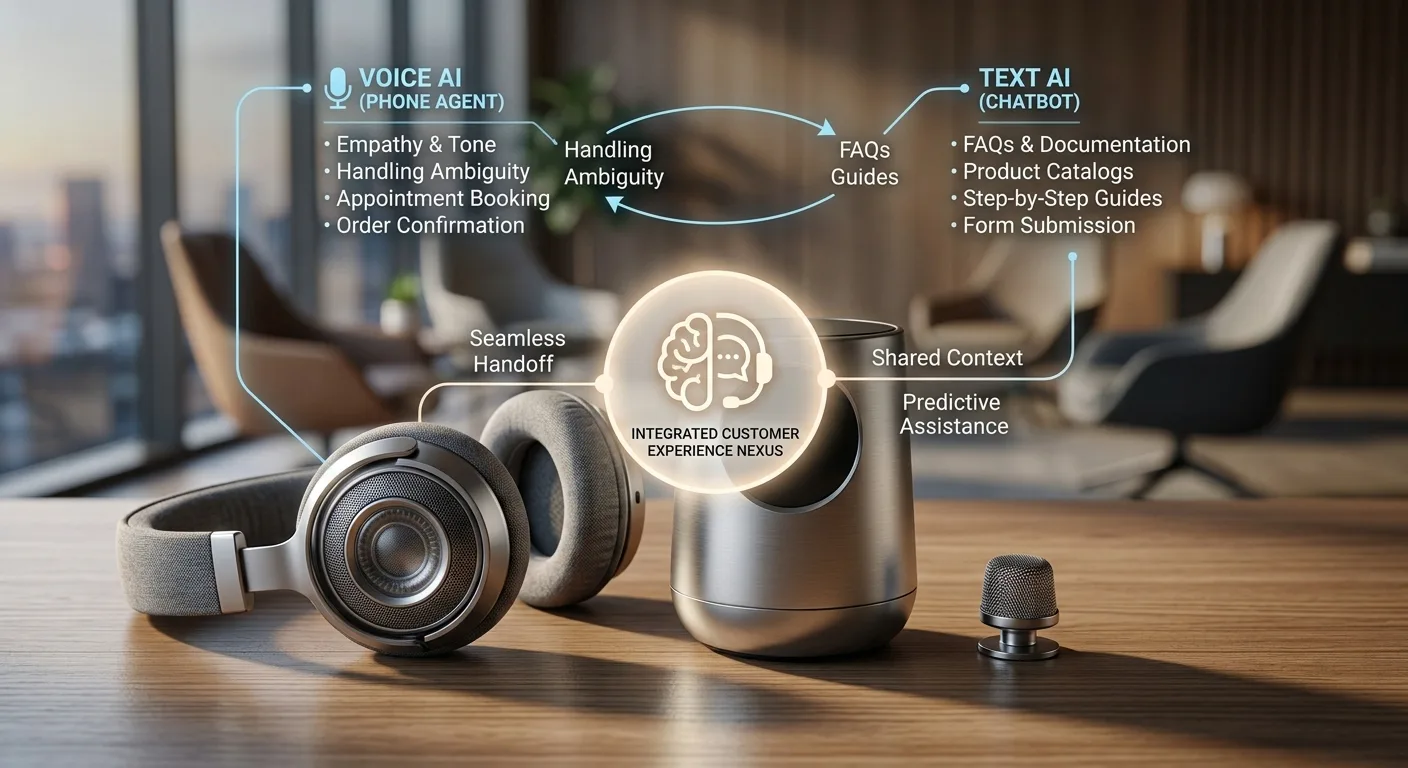
Rather than treating this as an either-or decision, many businesses get the best results by deploying an AI phone agent and an AI chatbot together — with both trained on the same business knowledge base. This creates a consistent experience regardless of which channel a customer chooses:
- A customer types a question on your website chatbot during the day
- The same customer calls after hours and gets consistent, accurate answers from your AI phone agent
- Both channels can access the same FAQ knowledge, business hours, and service information
- No customer is ever left without a way to get an instant, accurate answer
This combined approach doesn't just cover more channels — it ensures a consistent, on-brand experience no matter how a customer chooses to reach you.
Final Thoughts
There's no universal right answer between an AI phone agent and an AI chatbot — the right choice depends on how your customers actually prefer to reach you. Businesses built around phone-based bookings and inquiries will see the biggest impact from an AI phone agent, while businesses with heavy website traffic benefit strongly from a chatbot.
For most growing businesses, though, the smartest long-term move is deploying both — giving customers the freedom to reach out however feels most natural to them, while your business never misses another inquiry, call, or message.
Ready to Never Miss a Call Again?
Create your free AI phone agent and start answering calls and booking appointments automatically today.
Get Started Free